
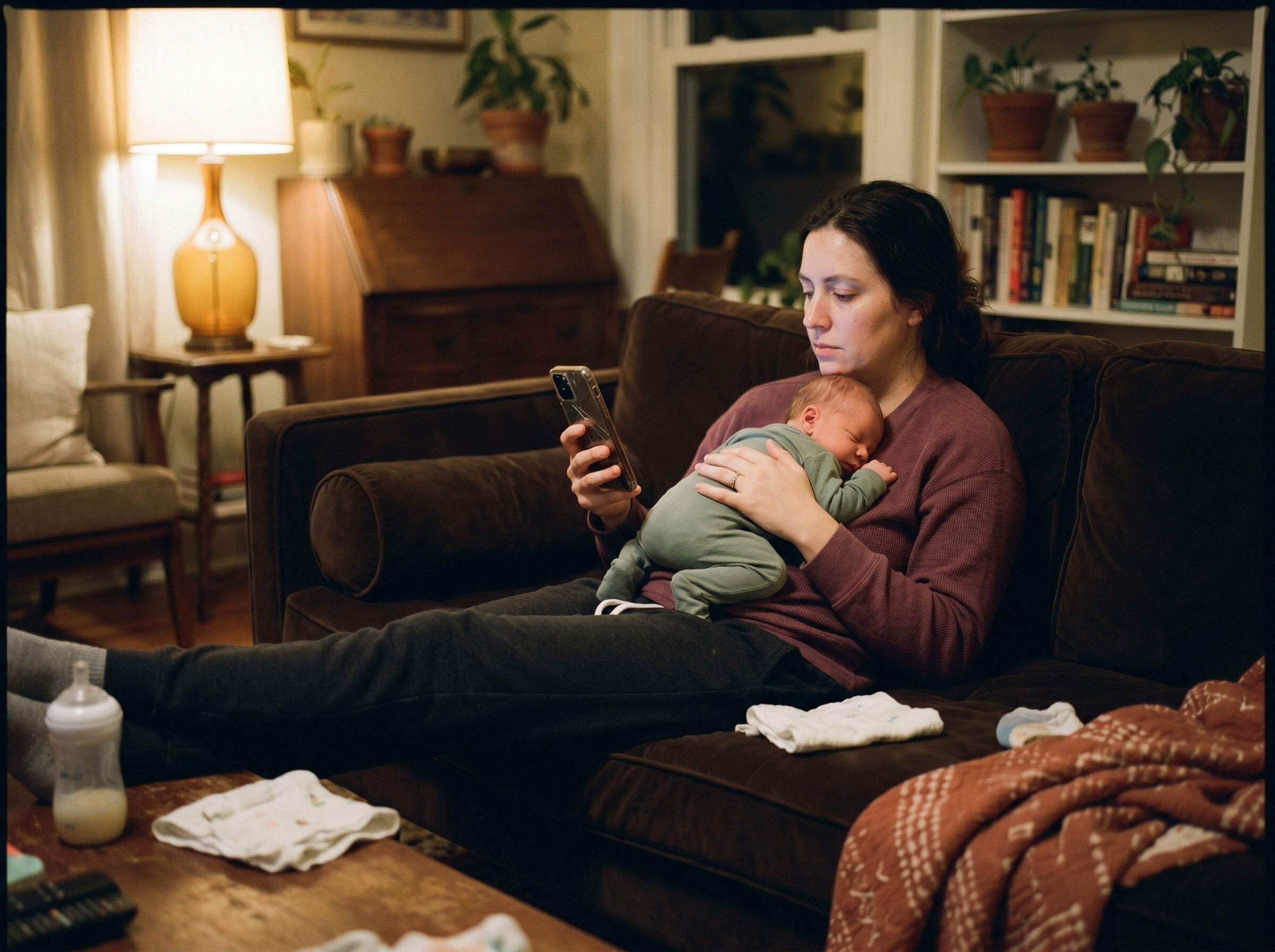
If you’re wondering whether what you’re feeling, thinking, or experiencing after birth is normal, I want you to know something before we get into anything else. Your body and your mind just went through something enormous. You are allowed to need time. You are allowed to rest. You are allowed to cry, ask for help, eat a real meal, stay in your pajamas, and take things much slower than you expected. Postpartum recovery is not a race back to who you were before your baby.
In This Guide You’ll Learn
- What normal postpartum physical healing can look like
- What to expect with postpartum bleeding, soreness, swelling, and fatigue
- Why sleep deprivation can affect your emotions so much
- What the 5,5,5 postpartum recovery rule means
- What is normal when it comes to bonding with your baby
- How to tell the difference between stable postpartum emotions, baby blues, and a postpartum mood disorder
- When it is time to call your healthcare provider
- Where you can find postpartum support
First, Let’s Talk About What Postpartum Really Is
There is so much attention placed on pregnancy and birth.
You spend months watching your belly grow, going to appointments, preparing for labor, buying tiny clothes, washing bottles, installing car seats, and getting ready for the baby.
Then your baby arrives and suddenly, the attention shifts almost completely to the baby.
How much did the baby eat? Did the baby sleep? How many wet diapers? Is the baby gaining weight? Are they breathing okay?
Meanwhile, you are sitting there wondering why no one is asking how you are doing.
Postpartum recovery deserves just as much attention as pregnancy and birth. Your body needs time to heal from pregnancy and childbirth, and your emotional health is going through an enormous transition too. Physical recovery can include bleeding, soreness, swelling, fatigue, hormonal changes, and changes to your pelvic floor and abdominal muscles.
And then there is the part nobody can quite prepare you for.
You are becoming a parent while recovering from giving birth.
That is a lot.
Your Body Does Not Need to “Bounce Back”
I want to get rid of that phrase completely.
You do not need to bounce back. You need to heal.
Your uterus is contracting back toward its pre pregnancy size. Your hormone levels are changing. Your pelvic floor and abdominal muscles have been through pregnancy and birth. Your body may be sore. You may be swollen. You may be bleeding. You may feel exhausted in a way you have never experienced before.
And if you had a cesarean birth, you are also recovering from major abdominal surgery.
That is not something you should be expected to simply get over.
Postpartum bleeding, called lochia, is normal after birth and generally changes from heavier, red bleeding toward lighter bleeding over time. It can continue for several weeks.
You may also experience swelling, especially in your feet and ankles, soreness around your perineum after a vaginal birth, night sweats, breast tenderness, and significant fatigue.
Some days you may feel surprisingly good then you may have a day where getting from the bedroom to the kitchen feels like a major accomplishment.
That does not mean you are going backward. Recovery is not always linear.
The 5,5,5 Rule
One of the ideas I really want you to know about is the 5,5,5 rule.
It is a simple postpartum rest framework that encourages you to give your body significantly more rest during those first few weeks.
It is not a medical rule, and it does not mean every postpartum person needs to follow the exact percentages or timeline. Your birth, your health, your recovery, and your provider’s recommendations matter.
Think of it as a gentle reminder that you do not have to jump right back into normal life.
The First 5 Days: In the Bed
The idea during those first five days is to spend as much time as possible resting in bed or on the couch.
Think food. Water. Sleep. Feeding your baby. Bonding. Healing.
That’s it.
You should be focusing on rest, warm meals and fluids, skin to skin, sleeping whenever possible, and minimizing visitors and other responsibilities during these first days.
This is where your support system becomes incredibly important.
Your partner, family, friends, or postpartum doula can take care of meals, household responsibilities, errands, older children, diaper changes, and other tasks while you focus on yourself and your baby.
And yes, that means you may need to say no to visitors.
You are allowed to say no.
Your baby is not a party favor.
You do not owe everyone a chance to hold your newborn while you are trying to recover.
The Next 5 Days: On the Bed
The next five days are about slowly beginning to do a little more while still prioritizing rest.
The framework is spending roughly 75 percent of your time resting in bed or on the couch and staying in comfortable clothes rather than feeling like you need to get dressed and return to your normal routine. It also encourages getting a little fresh air and beginning to invite visitors if you actually feel ready.
Notice that last part.
If you feel ready.
Not because someone else thinks you should be.
Not because your mother in law wants to come over.
Not because someone told you that you should be back to normal.
If stepping outside for ten minutes feels good, do it.
If staying on the couch feels better, stay there.
Your recovery belongs to you.
The Last 5 Days: Near the Bed
During the final five days of the 5,5,5 framework, the goal is to gradually begin moving around a little more while still spending about half of your time resting. Short walks, reading, small hobbies, and very light household tasks can be introduced as you feel ready.
The key word is slowly.
You do not need to prove anything. You do not need to clean the entire house because you suddenly had a good morning. You do not need to spend three hours running errands because you feel better than you did yesterday.
Postpartum healing is about listening to your body instead of constantly testing it.
What About Postpartum Bleeding?
This is one of those things I wish someone had explained in detail before my first birth.
Postpartum bleeding can be heavier than you expect, especially during the first few days. It gradually changes as your body heals.
You will use pads during this period and keep track of changes in bleeding can help you recognize when something does not feel right.
Your bleeding should become lighter over time.
If it suddenly becomes very heavy, you are soaking through a pad in an hour, you are passing clots larger than an egg, or you have other concerning symptoms, contact your healthcare provider promptly. The CDC lists heavy postpartum bleeding and large clots among urgent maternal warning signs.
When it comes to postpartum recovery, you do not have to decide whether something is “bad enough” to call.
If something feels wrong, call.
Your Pelvic Floor Needs Attention Too
Your pelvic floor deserves a conversation of its own.
Pregnancy and birth can put significant stress on the muscles and connective tissues that support your bladder, bowel, uterus, and other pelvic organs.
You may experience leaking when you cough, sneeze, laugh, or exercise.
You may have pelvic pressure.
You may experience pain during sex.
You may feel weak or simply feel like your body does not quite feel like yours anymore.
These are things worth talking about with your healthcare provider and, when appropriate, a pelvic floor physical therapist.
And I have a personal reason for caring so much about this.
During my last two pregnancies and postpartum periods, I experienced severe hip problems. I went from provider to provider trying to understand what was happening.
Not one of them mentioned pelvic floor physical therapy.
I eventually met a pelvic floor physical therapist while networking for my doula business, and I remember being stunned that this entire area of care existed.
That experience changed the way I looked at postpartum support.
You should not have to stumble across important care by accident.
What About Breastfeeding or Feeding Your Baby?
There is no single way to feed your baby that makes you a good parent.
You may breastfeed. You may pump. You may use formula. You may combination feed.
Your feeding journey may look completely different from what you pictured during pregnancy.
If you are breastfeeding, your milk supply will change during the first several days. Colostrum is produced during pregnancy and in the early days after birth, and milk production transitions over time. Breast engorgement (big and tight) can occur around the time milk production increases.
If feeding hurts, your baby is struggling to latch, you are concerned about your supply, or you simply feel like something is not working, ask for help.
A lactation consultant can be an incredibly valuable part of your postpartum support team.
You do not have to wait until you are completely overwhelmed.
Sleep Deprivation Is Real
Let’s talk about sleep.
Because everyone tells you that newborns wake frequently.
What they do not always explain is what repeated sleep interruption can actually feel like.
You may feel foggy. You may cry more easily. You may have trouble concentrating.
You may feel irritable. You may forget why you walked into a room. You may feel like you are operating on autopilot.
Some level of exhaustion is expected with a newborn, but extreme or overwhelming fatigue can also be a warning sign that deserves attention. The CDC recommends seeking medical care for overwhelming tiredness, especially when you feel too exhausted to care for yourself or your baby.
This is another reason the first few weeks are such an important time to accept help.
If someone offers to bring dinner, let them.
If your partner can take the baby for a couple of hours while you sleep, let them.
If someone offers to fold laundry, hand them the basket.
Your job is not to prove how much you can accomplish while sleep deprived.
Your job is to recover.
What About Bonding With Your Baby?
This one is important.
You may expect to see your baby for the first time and immediately feel an overwhelming connection.
Sometimes that happens. Sometimes it does not.
You may feel completely in love. You may feel shocked. You may feel exhausted. You may feel protective.
You may feel like you are taking care of a tiny stranger while everyone keeps telling you how magical this is supposed to feel.
There is no single correct timeline for bonding.
The connection with your baby may not happen instantly and that bonding can develop over time.
You are not a bad mother if you need time.
Bonding can happen through feeding, holding your baby, talking to them, skin to skin contact, looking into their eyes, changing diapers, comforting them, and simply being together.
Sometimes love grows quietly.
You Are Allowed to Leave the House
There can be this strange pressure during postpartum to either stay inside forever or suddenly return to normal life.
You can do neither. You can take a short walk. You can sit outside. You can go to the grocery store if you feel ready. You can go to a coffee shop. You can meet a friend. You can stay home all day.
There is no postpartum prize for leaving the house by day ten.
There is also no rule saying you have to stay inside.
Listen to your body.
If an activity increases pain or bleeding, slows your recovery, or leaves you completely depleted, that may be your body’s way of asking you to back off.
What Should I Eat During Postpartum Recovery?
Food is not an afterthought during postpartum recovery.
You just spent months growing a human and then went through pregnancy and birth.
Your body needs nourishment.
Keep easy meals available.
Eat when you can.
Keep snacks near where you feed the baby.
Drink water regularly.
If you have someone helping you, let them handle meals.
Prepare meals ahead of time and make nutritious foods easier to access once the baby arrives. A good real is to eat warm foods. It can make your gut happy and make healing faster. Cold food hurts your gut. If you are breastfeeding, watch your gut health even more! Your baby can get gassy or have reactions to the foods you eat.
And please do not make your first priority losing the baby weight.
Your first priority is healing.
Your body needs energy.
Your baby needs you.
You can worry about everything else later.
What Is Normal Emotionally After Birth?
This is where postpartum can become confusing.
You might be crying one minute and laughing the next.
You might feel incredibly happy and then suddenly overwhelmed.
You might worry constantly about whether your baby is breathing.
You might feel irritated that everyone keeps asking you questions.
You might desperately want five minutes alone.
You might miss your old life.
You might feel guilty for missing your old life.
You might love your baby more than you knew was possible and still feel completely exhausted.
All of those feelings can exist at the same time.
The important question is not whether you ever feel sad, worried, angry, or overwhelmed.
The important question is what those feelings look like, how intense they are, how long they last, and whether they are interfering with your ability to function.
Stable Postpartum Emotions
During the early weeks, you may feel tired, emotional, distracted, worried about your baby, or unsure of yourself while still having moments where you feel connected, hopeful, interested in life, or able to enjoy things.
You may cry and then feel better.
You may worry about your baby’s feeding or sleep and then settle once you have reassurance.
You may feel overwhelmed but still find moments of happiness.
Postpartum life can be messy without being a mental health disorder.
The Baby Blues
The baby blues are incredibly common.
They can include crying, irritability, worry, sadness, and feeling emotionally overwhelmed.
They often begin a few days after birth as your body adjusts to enormous hormonal changes and the reality of caring for a newborn. The CDC says baby blues symptoms typically resolve on their own within a few days, while other CDC materials describe them as usually resolving within two weeks.
You might find yourself crying over something that normally would not bother you.
You might feel incredibly sensitive.
You might worry about whether you are doing everything right.
You might feel exhausted and overwhelmed.
That does not mean you are failing.
But if those feelings are getting stronger, lasting longer, or making it difficult to function, it is time to talk with your healthcare provider.
Postpartum Mood and Anxiety Disorders
Postpartum depression and anxiety are different from the baby blues.
The symptoms can be more intense and last longer. They can interfere with everyday life and may include persistent sadness, hopelessness, severe anxiety, loss of interest in things you normally enjoy, withdrawal, feeling distant from your baby, intense anger, or thoughts of hurting yourself or your baby.
And postpartum mental health concerns are not always obvious.
You may be functioning on the outside while feeling completely overwhelmed internally.
You may be taking care of your baby while feeling like you are barely holding yourself together.
You may be terrified to tell someone what is happening because you are afraid they will think you are a bad mother.
Please tell someone anyway.
Postpartum depression and other perinatal mood disorders are treatable, and reaching out for help is not a sign that you are failing your baby.
What About Worrying?
Some worry is expected.
Your baby is suddenly the most important thing in your world.
You may worry about feeding.
You may worry about diapers.
You may worry about sleep.
You may check that little chest to make sure it is moving.
But if your worry becomes constant, overwhelming, or difficult to control, talk with someone.
You do not have to wait until you are unable to function.
Your mental health deserves attention just as much as your physical recovery.
When You Should Call Your Provider
There are some postpartum symptoms you should not simply wait out.
Seek medical care immediately for urgent warning signs such as heavy bleeding that soaks through a pad in an hour, passing very large clots, a fever of 100.4°F or higher, severe or worsening headache, vision changes, chest pain, trouble breathing, fainting, severe abdominal pain, severe swelling, or thoughts of harming yourself or your baby.
The CDC emphasizes that pregnancy related complications can occur during the year after delivery, so postpartum care does not stop just because the baby has arrived.
And there is another rule I want you to remember.
If something does not feel right, ask.
You know your body.
You know when something feels different.
You are allowed to call your provider even if you are not sure whether what you are experiencing is normal.
You Do Not Have to Recover Alone
This is the part I wish more people talked about.
Postpartum recovery is not supposed to be a solo project.
Your partner can cook. Your family can help with older children. A friend can bring dinner. A postpartum doula can help you adjust to life with your newborn. A lactation consultant can help with feeding. A pelvic floor physical therapist can help with physical recovery. A mental health professional can help you work through the emotional side of becoming a parent.
You can ask for help. You can accept help. You can even tell someone exactly what you need.
Sometimes the most helpful thing you can say is, “I don’t need you to hold the baby. I need you to hold the laundry.”
Your Recovery Does Not Have to Look Like Anyone Else’s
Maybe you feel amazing two weeks after birth.
Maybe you are still exhausted.
Maybe you are recovering from a cesarean.
Maybe you had a vaginal birth and are surprised by how sore you are.
Maybe breastfeeding is going beautifully.
Maybe feeding has been incredibly difficult.
Maybe you bonded with your baby immediately.
Maybe you are still finding your way toward that connection.
There is room for all of these experiences.
Postpartum healing is not a checklist you complete but a process.
Give yourself permission to move through it at your own pace while staying connected with your healthcare team.
Your Next Step
If you are preparing for postpartum, I want you to think about your support team before your baby arrives.
- Who will bring you food?
- Who will help with laundry?
- Who can watch older children?
- Who can come over so you can shower?
- Who can listen when you need to talk?
- Who can help you with feeding?
- Who can support your physical recovery?
- Who can help if your mental health starts to feel different?
You do not need to have every answer right now. You just need to know where to look.
That is one of the reasons I created Twyned. I wanted families to have a place where they could discover the professionals and support systems available to them instead of learning about them by accident.
Explore the Twyned directory to find providers who support families through pregnancy, birth, postpartum, fertility, adoption, and loss.
And if you are currently in those first exhausting days with your newborn, please hear this from someone who has been there.
You do not need to clean the house. You do not need to answer every text. You do not need to entertain visitors. You do not need to feel grateful every second. You do not need to love every moment.
You need to heal. You need to eat. You need to rest. You need support. And you deserve all four.
Leave a Reply

For Providers
For Families
company
List with us
Find Providers
About us
Listing options
Resource Library
Get in touch

Connecting families with trusted providers across every stage of the parenthood journey.
© 2026 Twyned.co | All rights reserved.
SITE CREDIT
Terms of Service
Privacy Policy
Login
Login


Be the first to comment